 Fleet Tracker

Key takeaways
- Every bike needs its own MOT, tax and insurance dates, even the ones in storage
- Record service intervals by months and miles, because low-mileage bikes still age
- Keep receipts with the bike they belong to, so the history goes with it when you sell
One bike is easy to keep on top of. The MOT date is in your head, the service book is in the drawer and the insurance renews when the email arrives. Add a second and a third, perhaps a classic that only comes out in summer and a sports bike laid up for the winter, and the dates start to drift apart. This guide covers what to record for each bike so nothing gets missed.
The dates every bike needs
Each motorcycle has its own set of renewal dates, and none of them line up with the others.
MOT. In Great Britain a motorcycle needs an MOT once it is three years old, and then every year. GOV.UK runs a free reminder service by text or email, sent one month before the MOT is due, though it is not available in Northern Ireland (GOV.UK).
Vehicle tax. Each bike is taxed separately. If a bike is off the road and untaxed, you can make a SORN, and you cannot use it on the road until you tax it again (GOV.UK).
Insurance. Many collectors insure several bikes on one policy, often with laid-up cover for the winter. Record the renewal date once, but note which bikes the policy covers.
Older bikes. If a bike was built before 1 January 1986 you can apply for the historic vehicle tax class and stop paying vehicle tax from 1 April 2026. A bike built or first registered more than 40 years ago does not need an MOT, as long as it has not been substantially changed (GOV.UK). Both still need recording, because “exempt” is a status you have chosen and declared, not an absence of information.
Stored bikes are the easiest to lose track of
A bike on SORN in the back of the garage is out of sight. Its MOT can lapse, its battery can go flat and its insurance can change without anyone noticing. For each stored bike, write down:
- that it is on SORN, and from when
- where it is kept, if not at home
- what was done to lay it up (fuel, battery, tyres, cover)
- what needs doing before it goes back on the road, including an MOT if it has lapsed
That way a stored bike shows up as “stored”, not as an overdue renewal you have forgotten about.
Service history by months and miles
Manufacturers set service intervals by distance and by time, whichever comes first. A bike that covers 800 miles a year still needs its oil, brake fluid and coolant changed on time, so record both:
- the date and mileage of each service
- what was done and what it cost
- the next service due, by date and by mileage
- the invoice or receipt
Low-mileage collections are where date-based servicing matters most, because the mileage reminder never arrives.
Paperwork that belongs to the bike
The V5C, MOT certificates, receipts for parts and work, and any restoration photos all add value when you sell. Keep them with the bike they belong to rather than in one big folder, and make sure the next owner can see a complete history.
Doing it without a spreadsheet
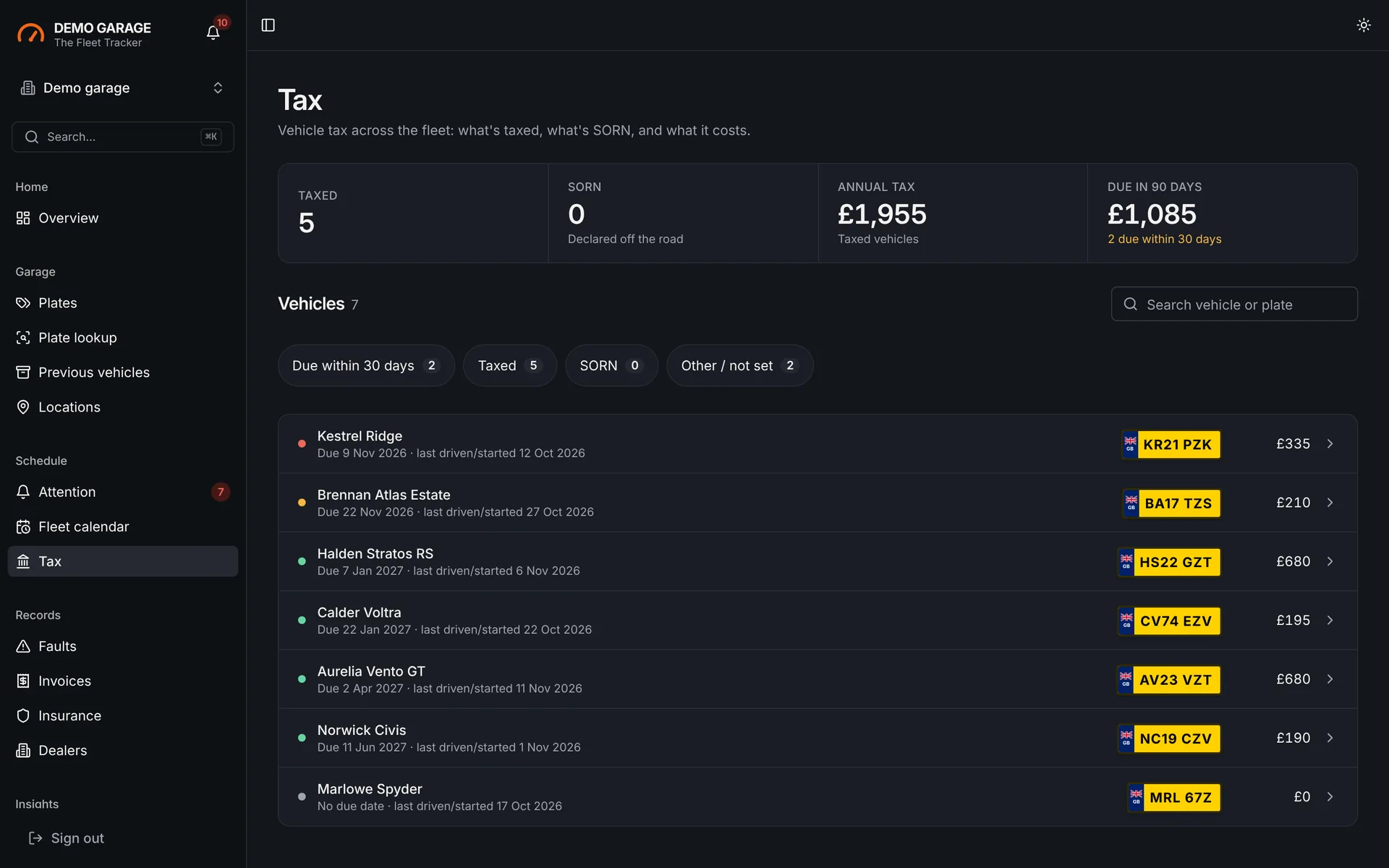
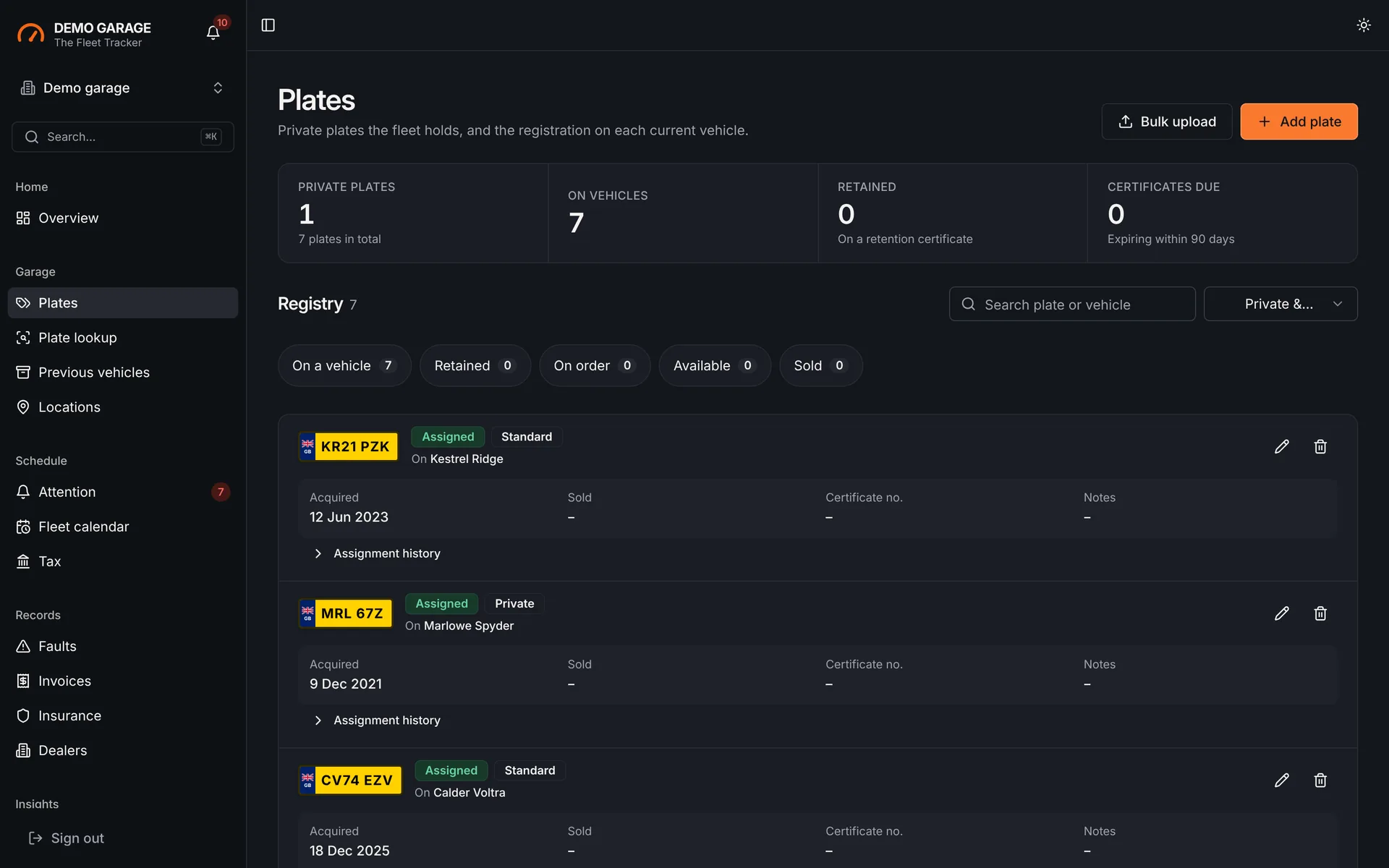
A spreadsheet works until you have to remember to open it. Fleet Tracker keeps each bike as its own record: current-format registrations fill in the MOT, tax and mileage history, older plates are added by hand, SORN shows as SORN, and service intervals can be set by months and miles. One alerts page then lists everything due across every bike, and cars too if you have them.
Keep every date, record and receipt in one place
Fleet Tracker tracks MOT, tax, insurance, servicing and private plates across every vehicle you own. Start with a free trial; no card is needed.
Sign up