 Fleet Tracker

Key takeaways
- Use one list of dates for every vehicle, whatever it is
- Link one multi-vehicle insurance policy to every vehicle it covers
- Track where each vehicle lives and whether it is in use or stored
A garage with a couple of cars and a few motorcycles is common, and it is also where record keeping tends to break down. The cars live in one system, the bikes in another, and the classic that only comes out on dry Sundays lives in nobody’s system at all. This guide sets out a simple structure that works for every vehicle in the collection.
Start with one list of dates
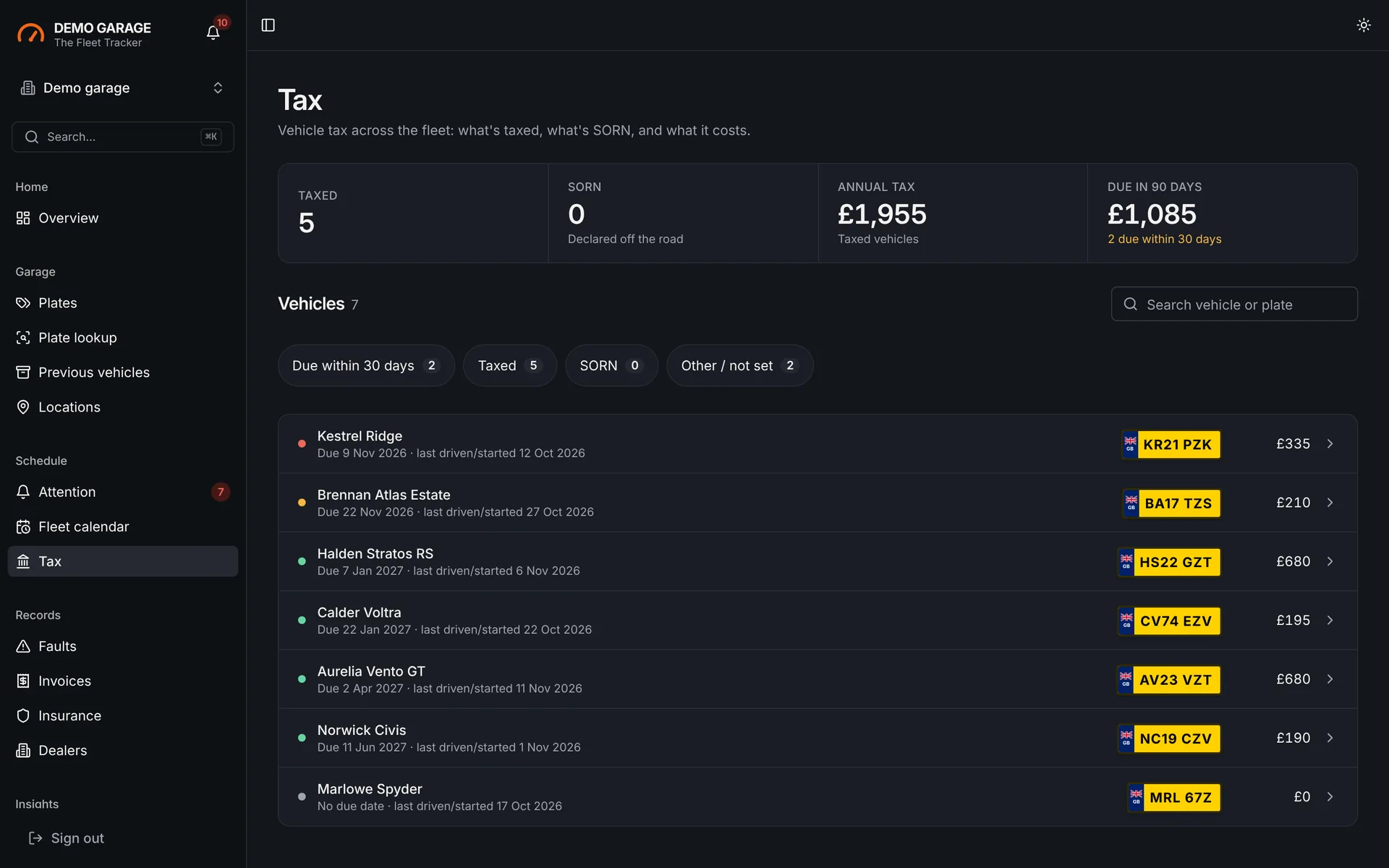
Cars and motorcycles share the same core renewals: MOT, vehicle tax and insurance. The mistake is tracking them in different places. Put every date for every vehicle in one list, sorted by what is due next, so a bike’s MOT is as visible as a car’s.
In Great Britain cars and motorcycles both need an MOT once they are three years old, and GOV.UK’s free reminder service covers both by text or email, one month before the MOT is due (GOV.UK). A reminder per vehicle is useful, but it does not give you the whole picture in one place.
Insurance: one policy, many vehicles
Mixed collections are often insured on one collector or multi-vehicle policy. Record the policy once, with its insurer, renewal date and premium, then link it to every vehicle it covers. Two things to avoid:
- recording the full premium against every vehicle, which makes each one look far more expensive than it is
- forgetting a vehicle that was added mid-term and is not on the schedule
Know where each vehicle lives
A mixed collection is rarely all in one place. Record for each vehicle:
- where it is kept: at home, in storage or with a specialist
- whether it is in use, stored, off the road or for sale
- if it is off the road and untaxed, whether you have made a SORN (GOV.UK)
This turns “where is the Triumph?” from a phone call into a glance.
Service history that suits each vehicle
Cars and bikes have different service intervals, and lightly used vehicles in a collection often hit the time limit before the mileage one. For every vehicle, record each service with its date, mileage, cost and invoice, and set the next service by both months and miles.
Older vehicles need a note of their status too. A vehicle built or first registered more than 40 years ago may not need an MOT if it has not been substantially changed, and vehicles built before 1 January 1986 can apply for the historic vehicle tax class (GOV.UK). Record what you have declared so nobody mistakes it for a missing date.
Costs across the whole collection
Once services, insurance and tax sit against each vehicle, you can see what each one costs to run and what the collection costs as a whole. It is the easiest way to spot the bike that has quietly cost more than the car.
Share it with whoever helps
If a partner, family member or specialist looks after some of the vehicles, give them access to the records rather than forwarding emails. A read-only view is often enough.
Putting it into practice
Fleet Tracker keeps cars, motorcycles and vans in one garage. Every vehicle’s MOT, tax and insurance dates appear on one alerts page, you can filter the garage by type when you only want the bikes, and one insurance policy can be linked to every vehicle it covers. Each vehicle keeps its own service history, documents and costs, and you choose who else can see them.
Keep every date, record and receipt in one place
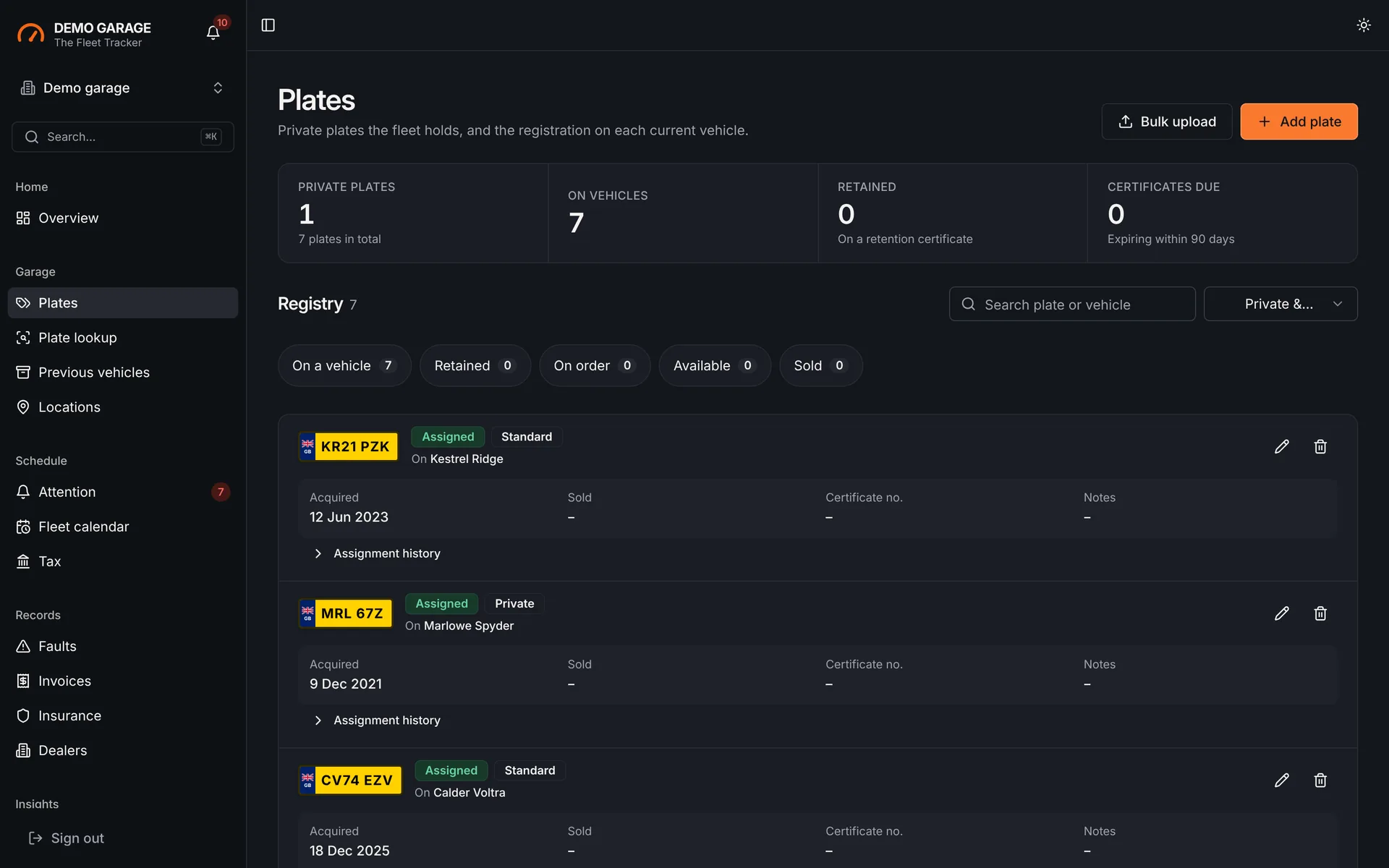
Fleet Tracker tracks MOT, tax, insurance, servicing and private plates across every vehicle you own. Start with a free trial; no card is needed.
Sign up